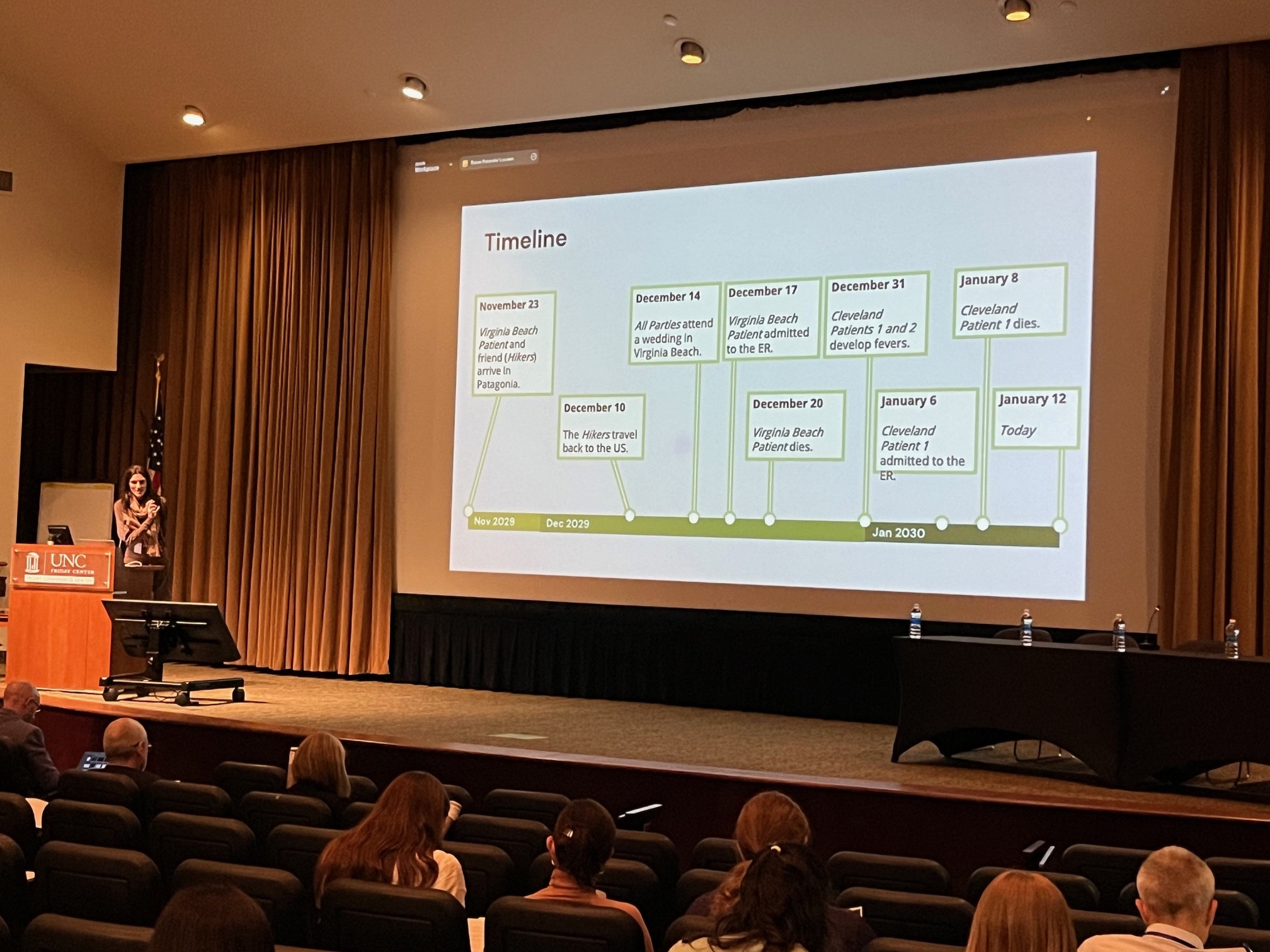
CAPTRS Facilitates Outbreak Response and Coordination Game with Scientists and Public Health Officials
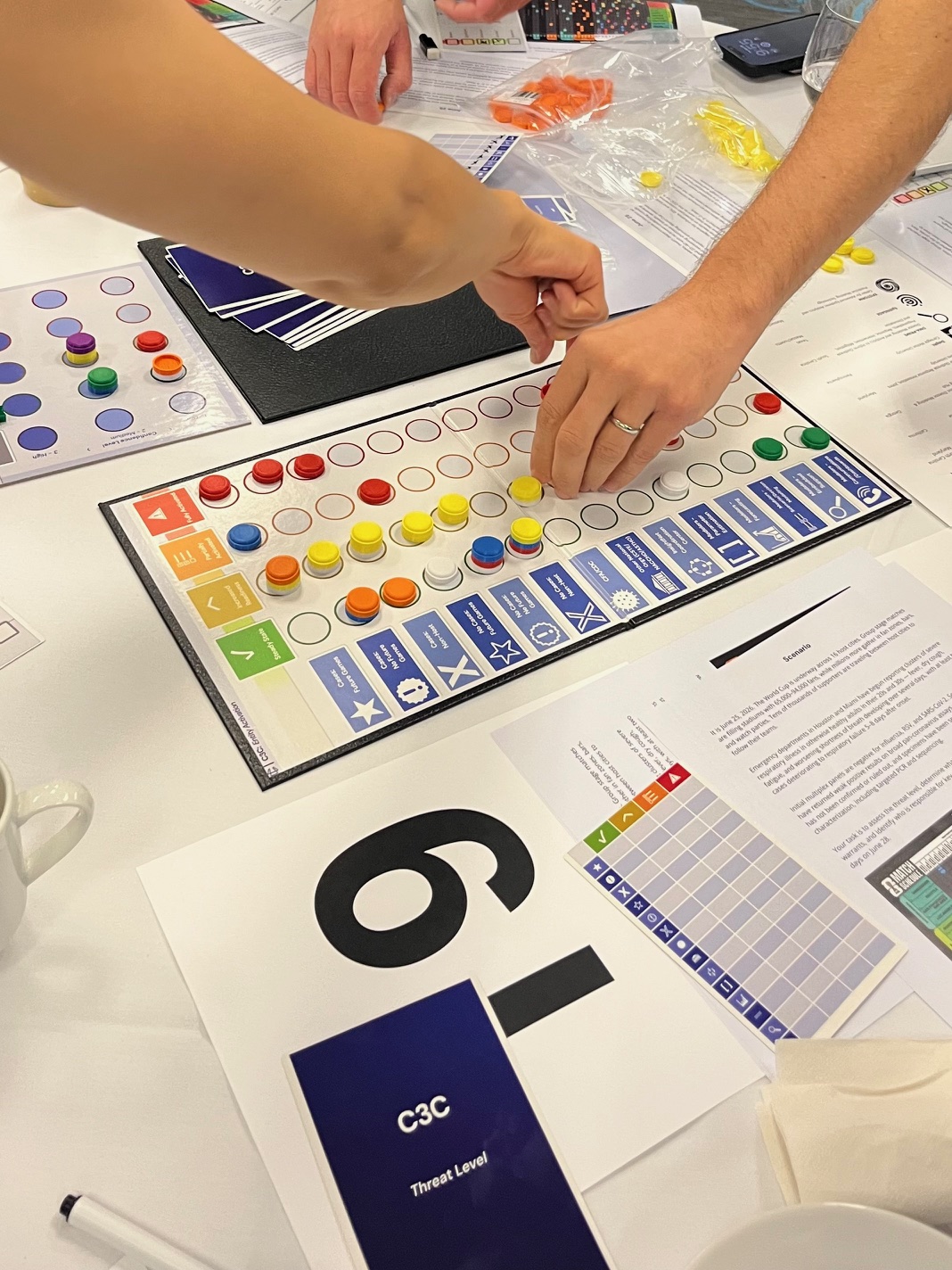
CAPTRS led a group of nearly 200 scientists and public health officials through the C3C Game at the Centers for Disease Control and Prevention Insight Net (National Outbreak Analytics & Disease Modeling Network) Annual Meeting in North Carolina this month. The hands-on simulation immersed players in a fast-moving outbreak scenario, challenging them to navigate threat assessment, entity activation decisions, capability analysis, and the coordination demands of real-time response. The exercise unfolded over multiple rounds of a fictional, escalating respiratory illness outbreak affecting World Cup host cities.
Effective public health emergency preparedness depends on meaningful collaboration across disciplines. While tabletop exercises remain a staple of Public Health Emergency Preparedness, they often struggle to move beyond theoretical discussion or replicate the cognitive pressure of a real-world crisis. The C3C Game addresses this gap by placing participants in a dynamic simulation where they first assess situations individually, then collaborate as a group, engaging with the perspectives and priorities of multiple responding entities. The experience surfaces hidden misalignments and creates a structured environment for practicing coordination across roles and strengthening decision-making under pressure.
"It was great seeing the game scale to so many people,” said Louis Lafair, Senior Vice President of Strategy and Game Invention for CAPTRS. “My favorite moment was when some players realized that they had different information. Suddenly everyone began comparing their data and assumptions to form a unified picture."
Insight Net was established by the Centers for Disease Control and Prevention in the wake of the COVID-19 pandemic to accelerate the development of forecasting and decision-support analytics for outbreak detection and response. To date, the network has awarded over $100 million to 13 teams, bringing together experts from more than 100 universities, companies, and public health departments across the United States.
As part of the epiENGAGE team—led by Lauren Ancel Meyers at the University of Texas at Austin—CAPTRS is developing experiential games that help ensure faster, more coordinated scientific responses to emerging threats. By building the “mental muscles” required for synchronized action, these tools equip teams to respond more effectively when it matters most.
 Previous Post