

Custom Designed Games
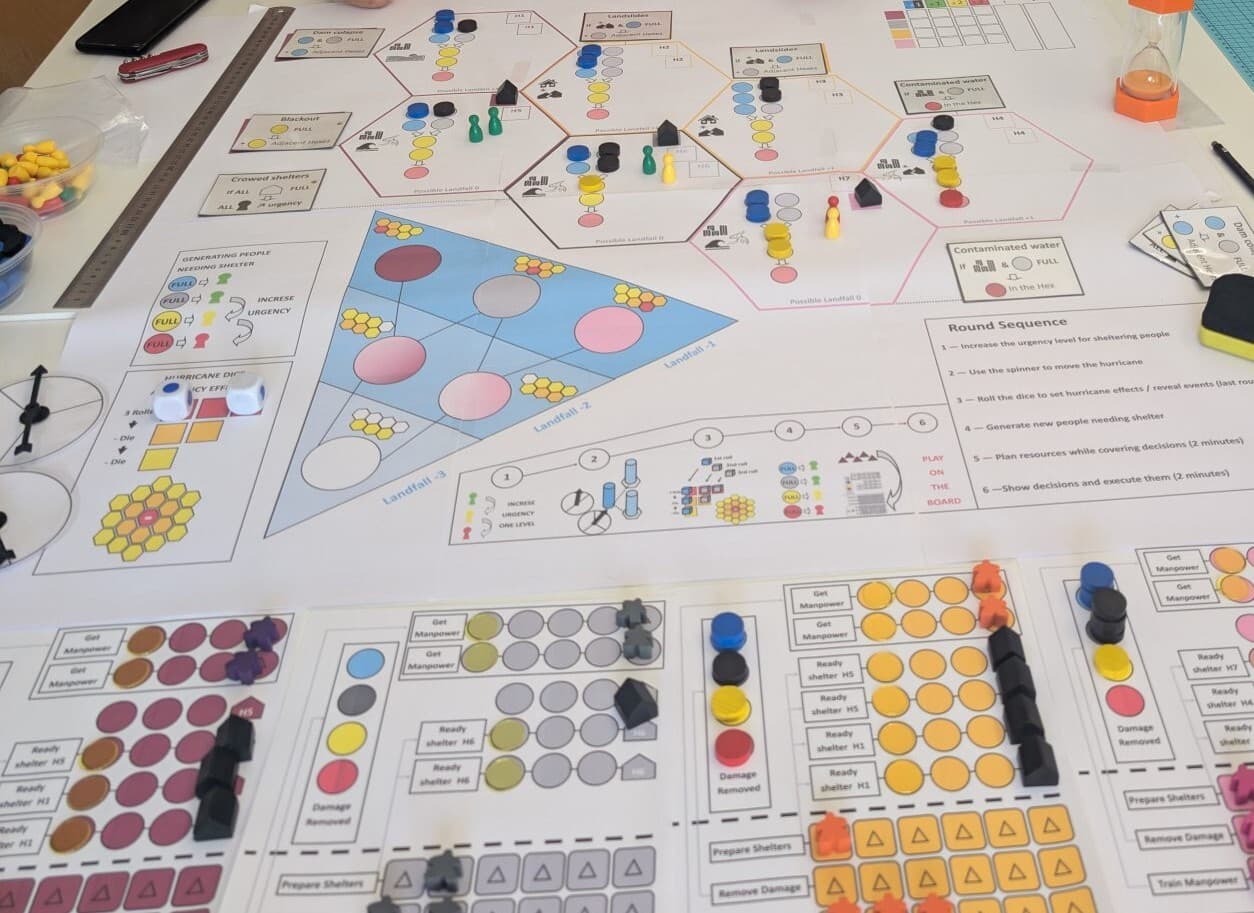
Purpose-Built Games and Simulations
CAPTRS can design and produce custom games and simulation exercises in collaboration with clients—if our existing games don't meet your specific needs, we can partner with you to create one that does.
Our team works with our partners and stakeholders to ensure all perspectives are included in the design plans. As part of the participatory design process, CAPTRS designers will work closely with the client to:
- Research-driven simulations grounded in real-world preparedness science.
- Designed for decision-makers across public health, emergency management, and beyond.
- Customizable to your organization's specific scenarios and learning objectives.

Examples of past custom games include:
7-1-7 Game
Developed in collaboration with Resolve to Save Lives to help national health leaders prioritize activities that directly improve the speed of outbreak detection, reporting, and response—helping nations meet their 7-1-7 targets and close critical health security gaps.
Surge Capacity Game
Developed in collaboration with CEPI to practice staff responses to surge, and understanding of role-specific responsibilities during times of surge.
AI Future Game
Developed in collaboration with a foundation to explore investments, prioritization, and impacts of AI in the future.
CAPTRS Collaborative Game Design Process
When developing new games, CAPTRS will retain all intellectual property (IP) rights for the game, but the client may request to have exclusive rights to content specific to the version of the game created for their purposes. As a nonprofit organization working to enhance preparedness and response efforts, our goal is to add to our portfolio of game frameworks for use by various organizations. Because of this, we evaluate custom game requests against common needs to make sure there is a broader use case for the game framework. Once we decide to move a custom game request forward, a client can expect to follow a timeline similar to the process depicted below, with a 4-6 month development.


Scope Game Details




Talk Pricing
Pricing is based on scope & use case
