CAPTRS Pilots 7-1-7 Strategy Game for Outbreak Detection and Response with the WHO
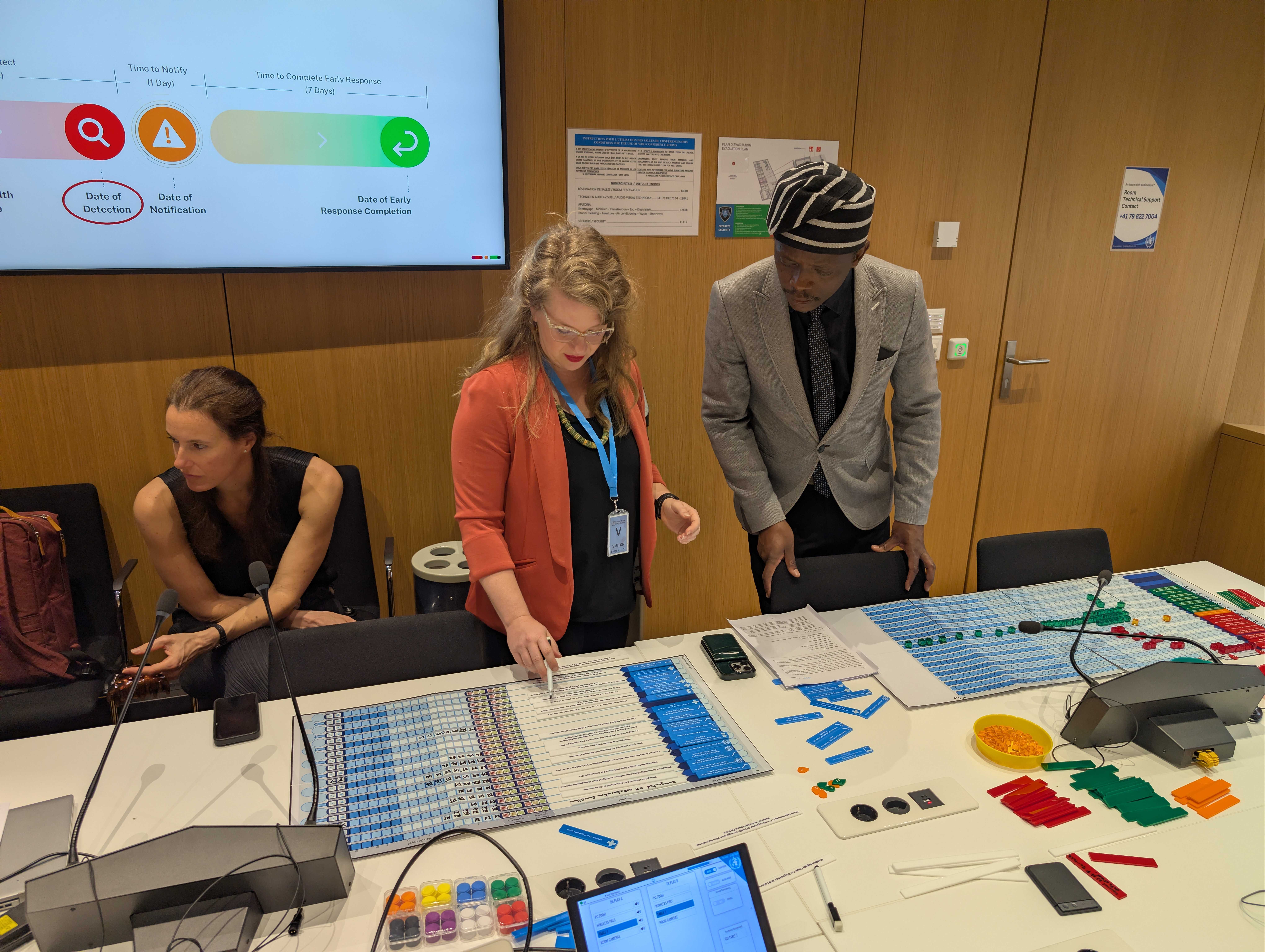
CAPTRS was pleased to join a group of leaders at the WHO this week to pilot a new outbreak detection, notification and response game developed in collaboration with the 7-1-7 Alliance. The 7-1-7 Strategy Game takes players through two structured modules that test strategic choices and their impact on outbreak timeliness. The goal of 7-1-7 is to detect a suspected outbreak within seven days, notify public health authorities within one day, and mount an effective response within seven days. Achieving these benchmarks requires coordinated action across surveillance, laboratories, emergency operations, risk communication, and leadership.
In the first module, players prioritize activities that could improve timeliness across the 7-1-7 cascade. They assign durations to each activity and hypothesize how these investments might reduce bottlenecks. In the second module, participants face a simulated outbreak scenario and test whether their strategic choices translate into faster detection and response.
The scenario focused on an outbreak of Sudan Ebola virus disease in Uganda, prompting players to grapple with real-world challenges such as delayed case recognition, reporting breakdowns, and operational constraints. By replaying modules and experimenting with alternative strategies, teams built intuition about which investments yield the greatest gains in speed and effectiveness.
Facilitated by CAPTRS’ Chief Game Designer, Dr. Micael Sousa, the playtest generated rich discussion on system bottlenecks, trade-offs in resource allocation, and the behavioral dimensions of decision-making under uncertainty. Participants highlighted the value of visualizing the cumulative impact of seemingly small delays across the detection-to-response timeline.
The 7-1-7 Game represents a growing recognition that preparedness is not only about plans and guidelines, but also about decision-making capability. By combining strategic insight with experiential learning, the simulation supports countries in translating the 7-1-7 framework into concrete, prioritized actions.
The pilot session with staff familiar with the 7-1-7 framework offered an opportunity to test the game mechanics ahead of broader country-level piloting planned later this year. Following further refinement and piloting, the game is expected to support Member States in strengthening their outbreak readiness.
View photos and key moments from the playtest session here.
 Previous Post