CAPTRS Presents Reliability Game at the epiEngage Center Meeting
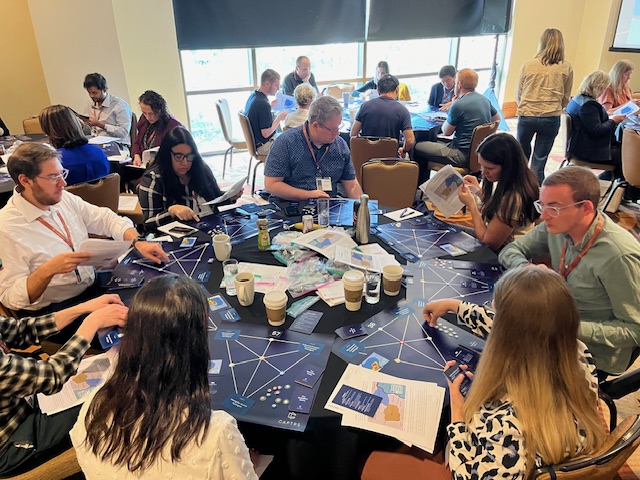
The CAPTRS team recently joined approximately 90 researchers, scientists, public health officials, and partner organizations for a pivotal meeting in Austin, organized by the CDC’s Center for Forecasting and Outbreak Analytics-funded epiEngage Center. CAPTRS Co-founder Dr. Lauren Ancel Meyers leads the epiEngage Center alongside Dr. Nick Reich from the University of Massachusetts Amherst. This gathering brought together co-investigators, partners, and advisors of the epiEngage Center who are dedicated to enhancing outbreak response.
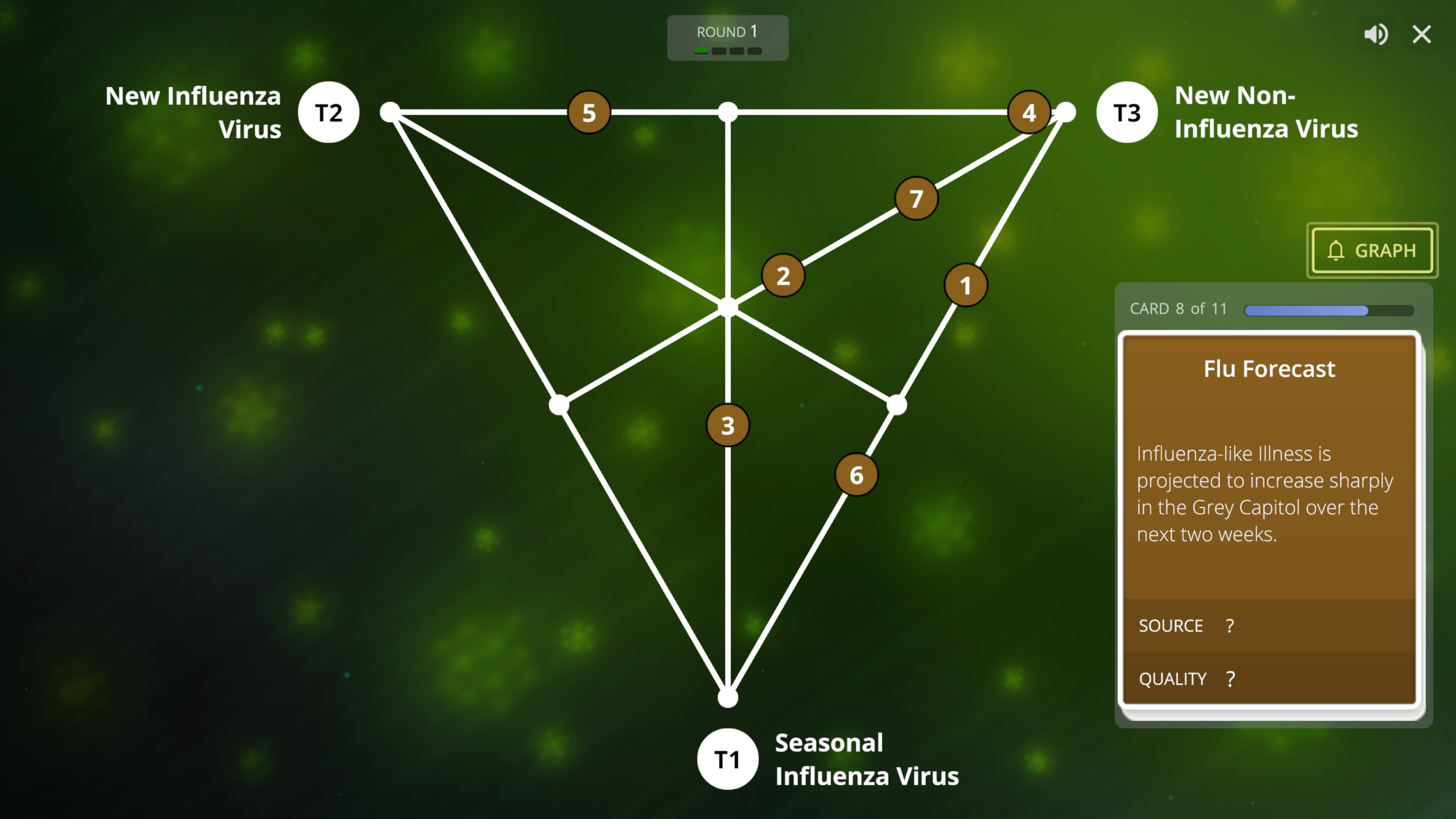
Over the course of the three-day conference, CAPTRS Chief Scientist Dr. Francesca de Rosa facilitated an engaging session featuring the latest edition of the CAPTRS Reliability Game. Participants were presented with a complex scenario that included geopolitical, socioeconomic, and pathogen-specific details. Their task was to determine the type of pathogen responsible for the initial outbreak given limited information. This interactive game is designed to enhance situational awareness in the absence of direct health data and to capture shifts in participants' beliefs about the reliability of various information sources. It encourages players to evaluate the significance of different types of information and how they can be integrated to improve situational understanding.
epiEngage is a multi-year initiative. CAPTRS is committed to delivering innovative tools like the Reliability Game to bolster US emergency response efforts. Dr. de Rosa will spearhead the design and implementation of CAPTRS simulation games that equip public health officials with powerful analytics, enabling them to collect data that refines these tools over time.
The epiEngage Center is one of thirteen funded partner centers collaborating with the CDC’s Center for Forecasting and Outbreak Analytics to build a robust outbreak response network. We are excited to introduce more games and tools to this community and to other centers engaged with the CFA, paving the way for enhanced preparedness and response capabilities.
 Previous Post