A3P in Practice with Waco-McLennan County Public Health District
In public health response, activation is rarely a simple switch. Teams often have to make decisions while the situation is still developing, information is incomplete, and staff are weighing different interpretations of the same facts. Earlier this spring, leaders from the Waco-McLennan County Public Health District Initial Response Team used the CAPTRS A3P (Assess, Align, and Activate for Preparedness) game to explore situational awareness, threat assessment, team alignment, and activation planning. The session brought together public health staff trained as a first line of activation during a disaster response, including nurses and clinical staff, outreach staff, health educators, administrative staff, communications staff, epidemiology staff, and preparedness staff.
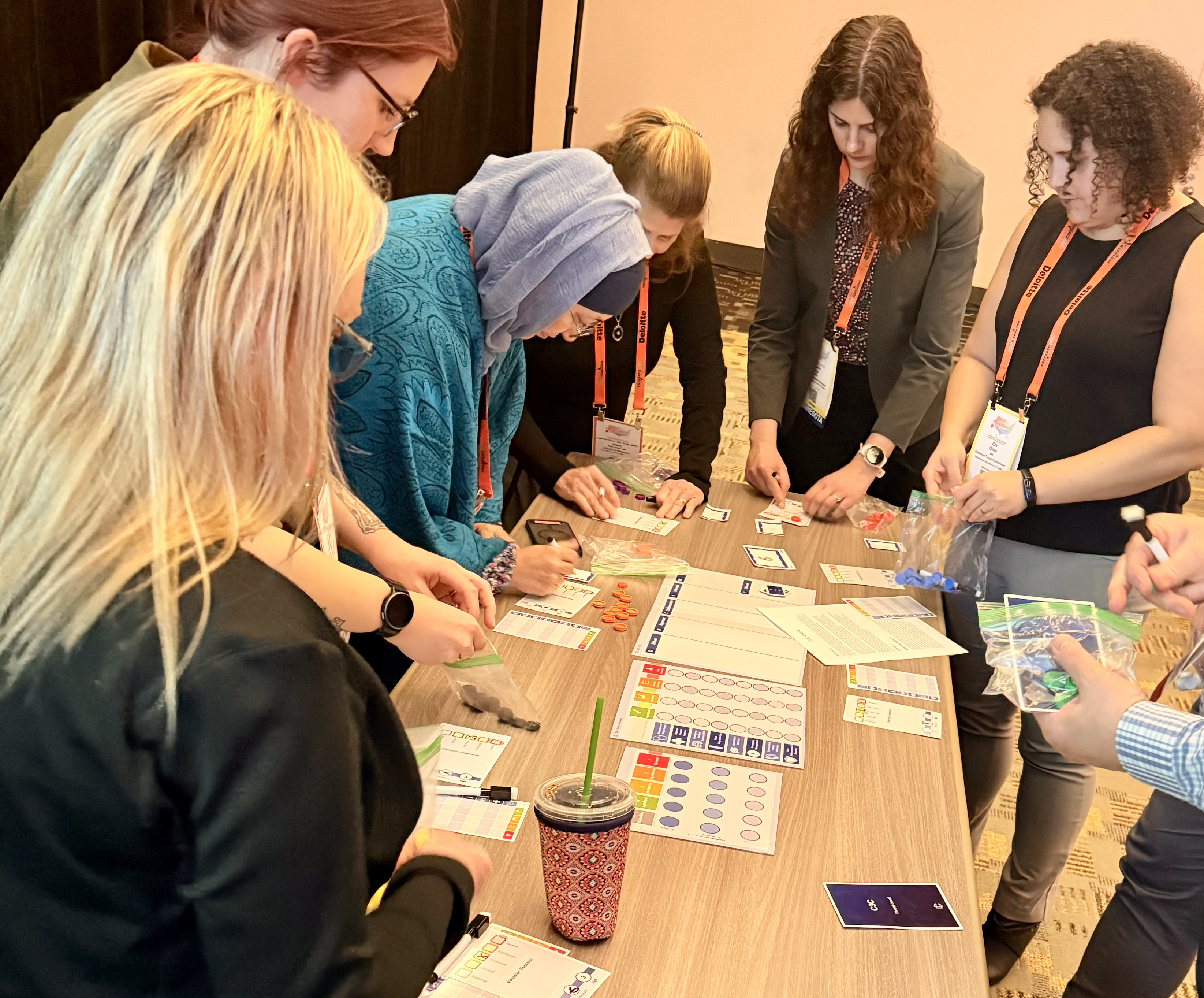
The A3P game session helped staff understand how individuals and groups evaluate information as they determine an activation level, and connect those decisions back to the Health District's own activation plans. It also helped the team think through what mobilizing people and resources beyond normal operations can look like. During the game, players receive new data through multiple cards in a deck, revealing additional information about the scenario. Each player uses an individual game board to visually capture their assessment of the threat based on data provided, and selects a hypothesis, indicating their confidence level. Then they compare conclusions with others and work toward alignment.
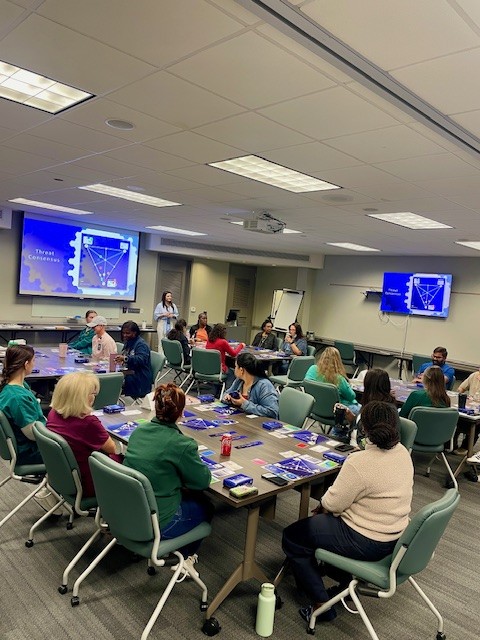
For this session, multiple groups played simultaneously. “Even after receiving the same information, the tables reached different conclusions, which was interesting” said Courtney Wollard, Emergency Preparedness Supervisor for the Waco-McLennan County Public Health District. “One table agreed on a high threat level and high activation. Another agreed on a low threat level with no activation. Two tables landed on a moderate threat level and suggested partial activation.”
That spread of responses created a useful preparedness conversation. A3P made the differences visible, giving participants a way to explain what they noticed, what they prioritized, and what their selected activation level would require. As Wollard noted, the game helped staff think outside of their normal job roles while also reviewing what public health activation could look like during an emergency.
A3P uses an all-hazard framework, and can support multiple threat scenarios. The Health District plans to use A3P again with additional response team groups, including Environmental Health staff, HIV/STI case workers, WIC staff, Vital Statistics staff, and other remaining Health District staff. That continued use matters because activation decisions rarely sit with just one role or one department.
Preparedness plans are essential, but plans alone cannot teach people how their thinking changes under uncertainty, or how their colleague or supervisor thinks about the same information differently. A3P gives teams a structured way to practice before the pressure is real: assess the threat, align with one another, and activate a response with clearer reasoning behind the decision.
Learn amore about A3P here.
 Previous Post