
Deepen Learning Through Simulation
Students learn by doing. CAPTRS games place participants in realistic scenarios where they must analyze information, make decisions, and adapt as situations evolve.

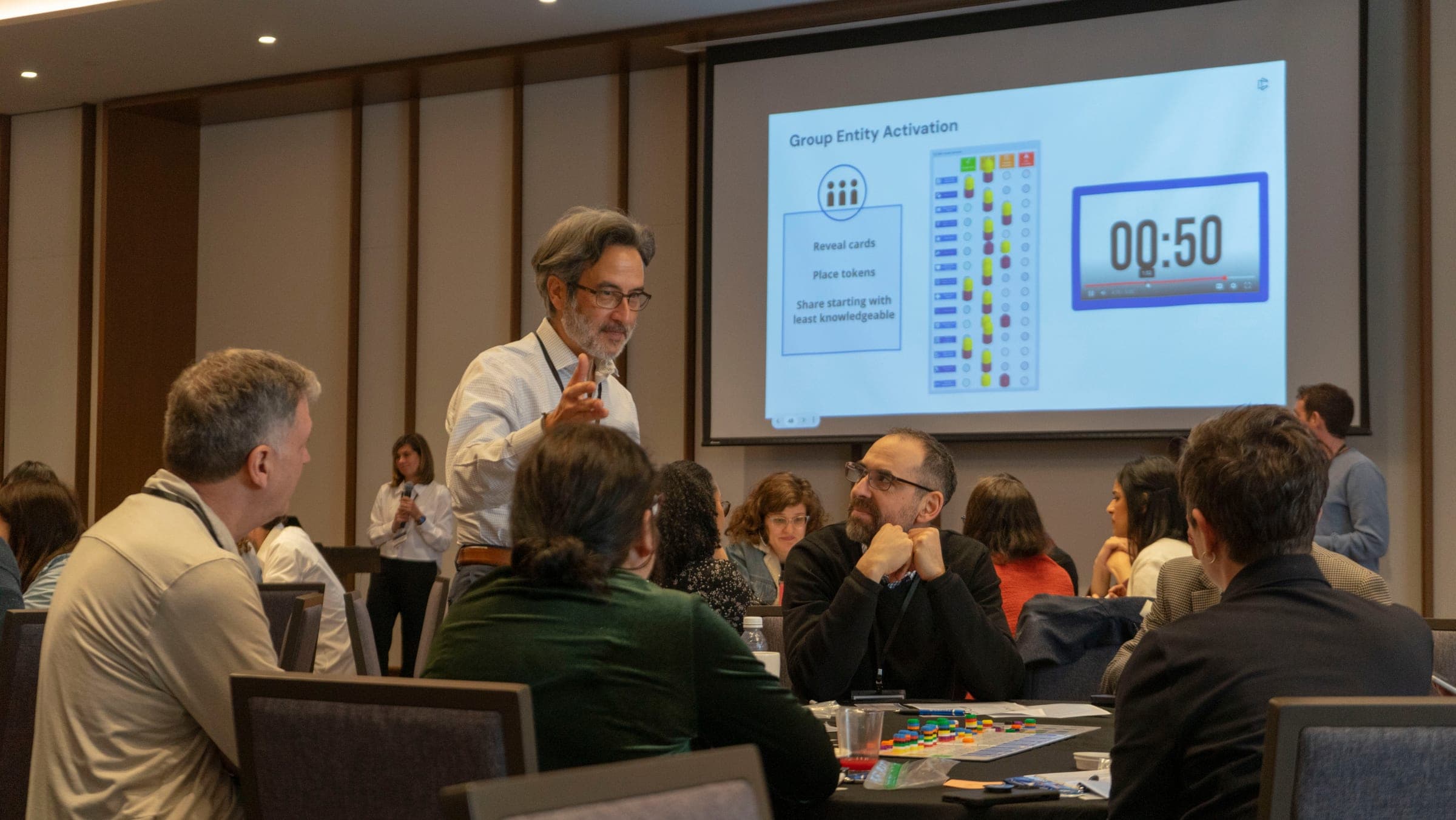
Many of today's most important challenges cannot be fully understood through lectures, readings, or discussion alone. Students learn best when they are required to make decisions, navigate uncertainty, collaborate with others, and experience the consequences of their choices.
CAPTRS transforms complex topics into immersive learning experiences. Through simulation-based games, students move beyond theory and actively engage with real-world challenges, practicing critical thinking, communication, leadership, and problem-solving in a structured environment. Our games provide educators with an engaging and repeatable way to facilitate discussion, explore complex systems, and create memorable learning experiences that improve knowledge retention and practical understanding.
Students learn by doing. CAPTRS games place participants in realistic scenarios where they must analyze information, make decisions, and adapt as situations evolve.

Many challenges involve interconnected social, political, economic, and operational factors. Our games help students understand how decisions create downstream impacts across systems and stakeholders.

Participants practice leadership, collaboration, negotiation, communication, and decision-making skills that are difficult to teach through traditional classroom methods.

Games increase participation, encourage discussion, and provide a structured framework for exploring difficult topics in an interactive way.
All CAPTRS games support education and training. These are additional games we have used successfully with universities.
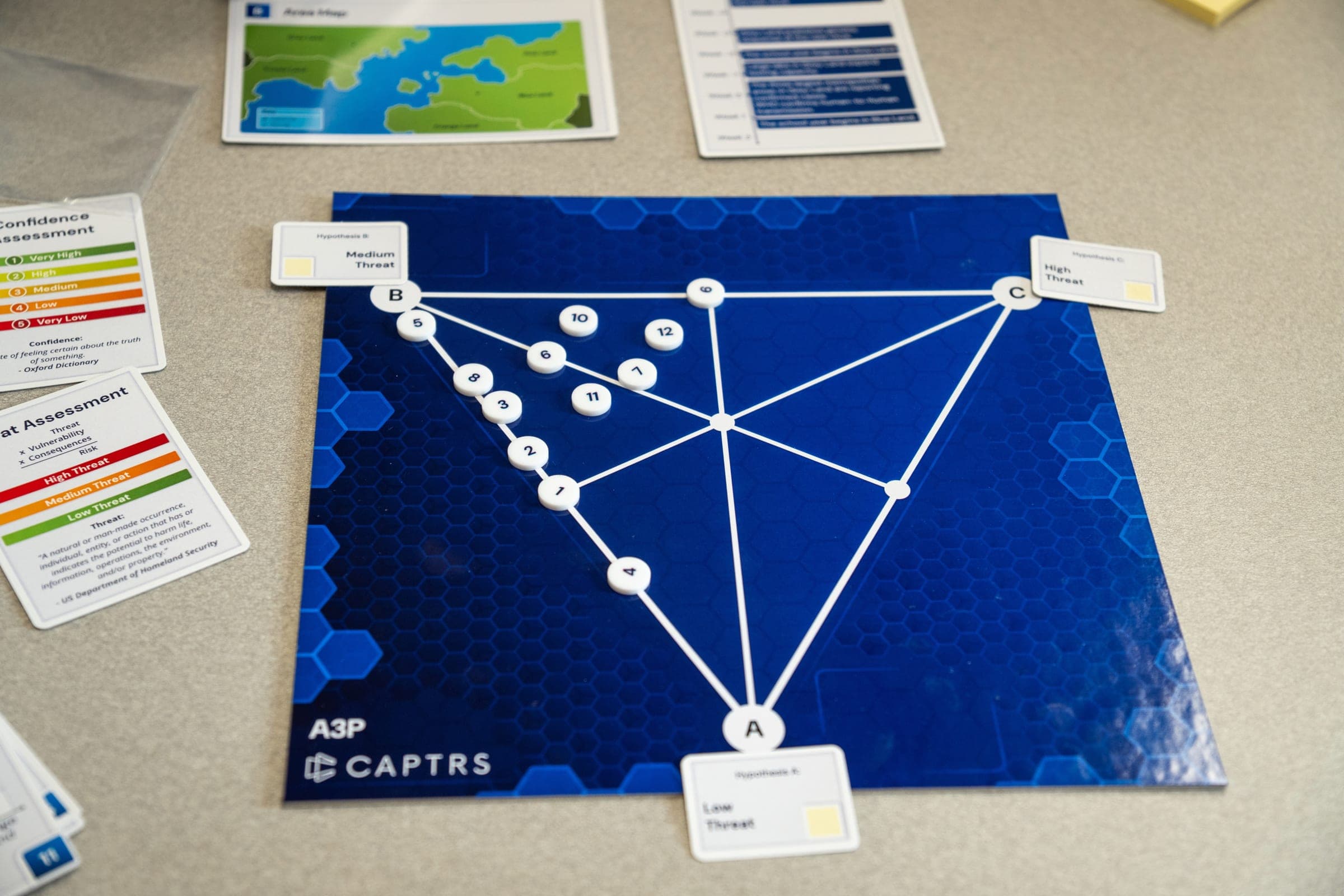
Assess the threat. Align with your team. Activate a response.
Threat assessment under uncertainty, shared situational awareness, activation triggers and activation decisions
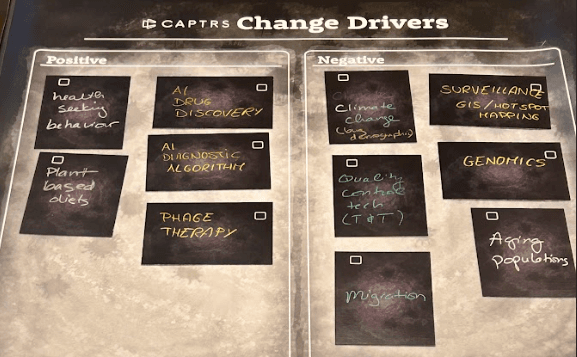
Connect Knowledge. Shape AMR Policy.
A collaborative systems-mapping game designed to bridge the gap between individual expertise and collective action by integrating insights into a unified representation of the AMR problem
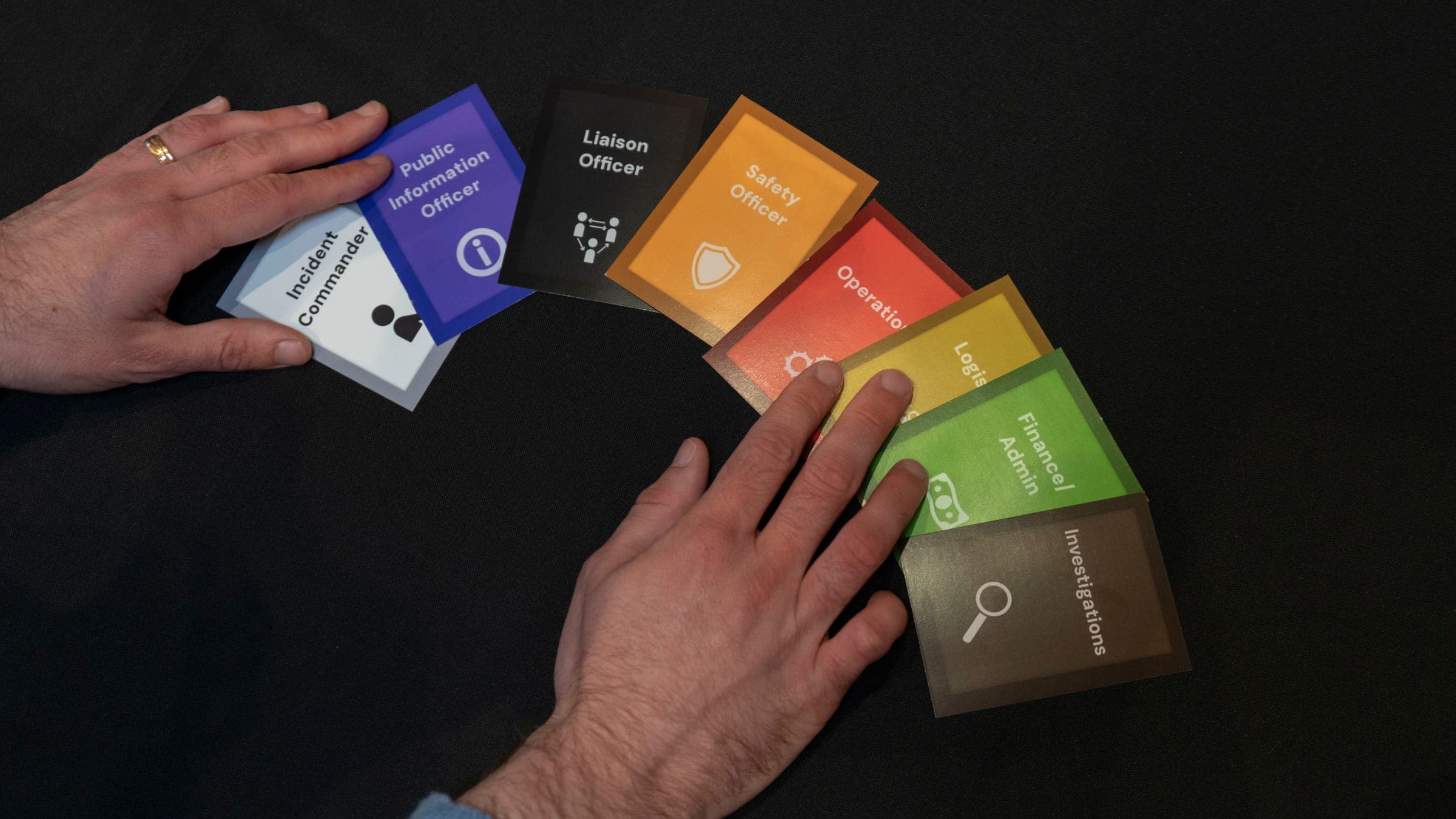
Master ICS roles quickly.
Fast, approachable practice for Incident Command System role clarity and NIMS familiarity
