

“This was very realistic, mirroring exactly what we faced in battling wildfires in our region.”
EMCE: Firestorm
Read the forecast. Protect what matters. Coordinate.
Have questions about this game?
Contact Us Today


EMCE Game Framework
Deciding how to allocate resources during an emergency is challenging. Emergency Management Cascading Effects (EMCE) games place players in fast-moving crisis scenarios where they must allocate resources quickly between preparedness and incident response, adapt to shifting conditions, and collaborate under time constraints.
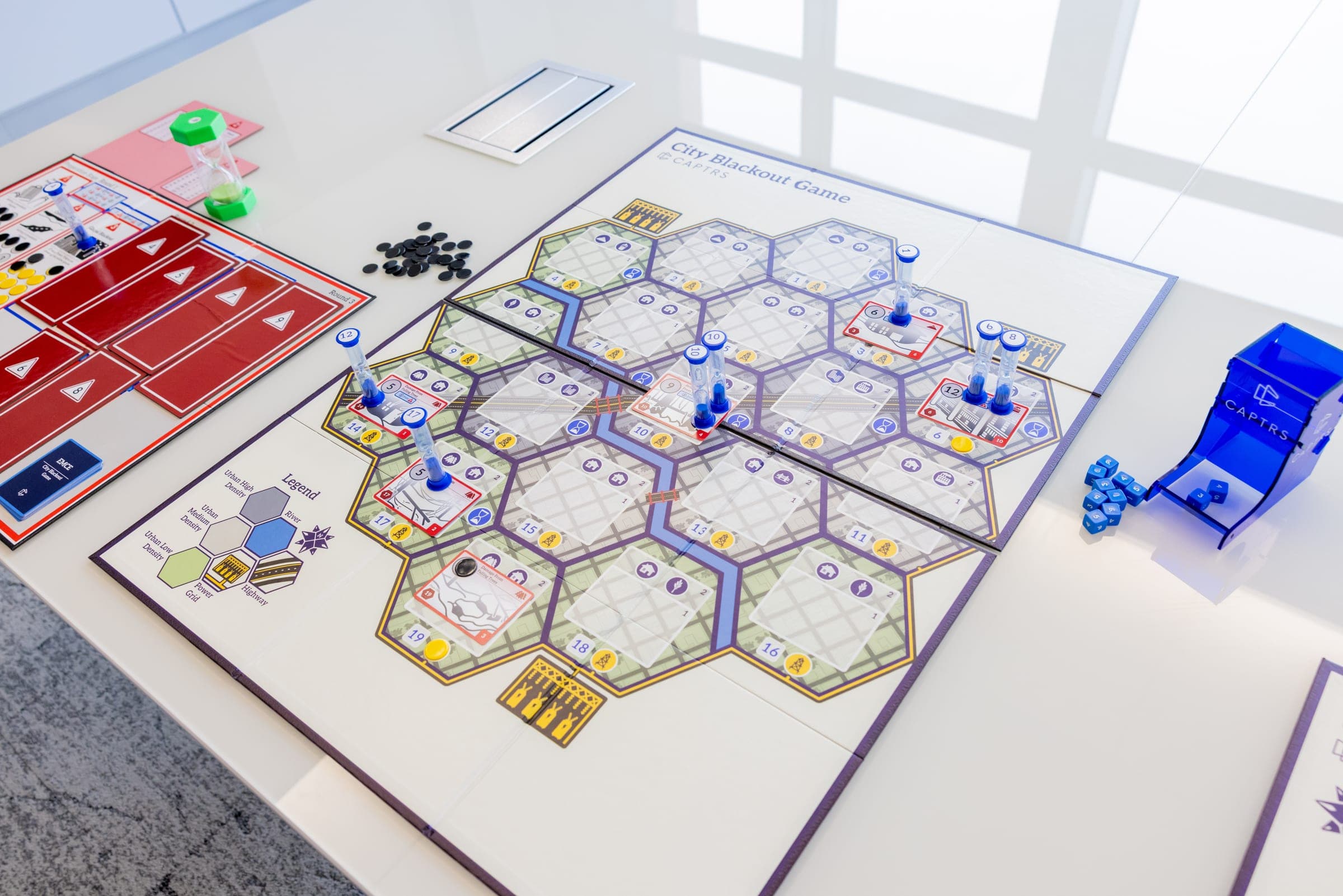
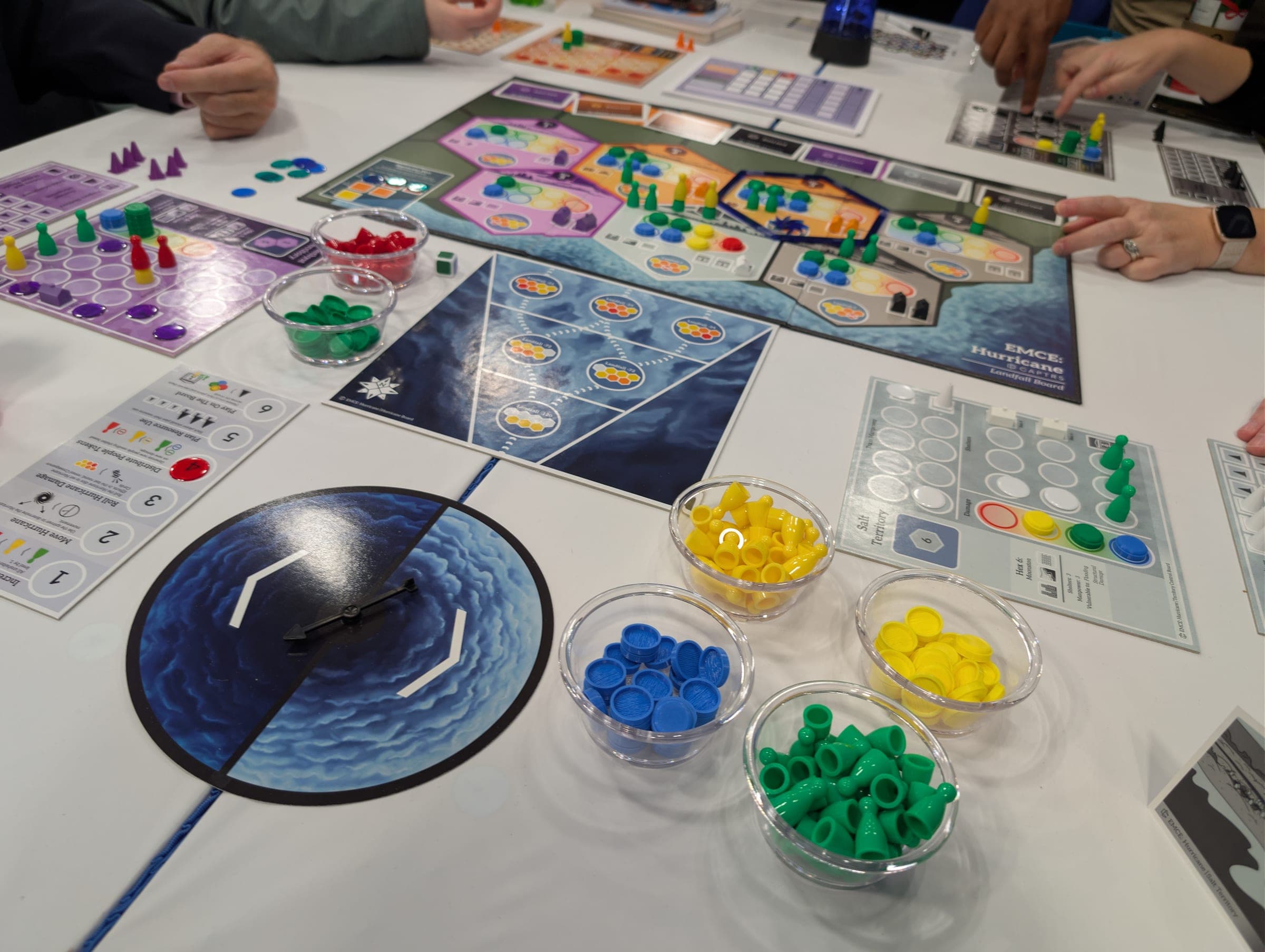
This game framework can be used for other emergency scenarios, beyond the current City Blackout, Hurricane, and Firestorm versions. If you are interested in working with CAPTRS on a new version of EMCE, please contact us.
Description
Emergency Management Cascading Effects (EMCE): Firestorm challenges players to coordinate a wildfire response as fire conditions evolve, resources become strained, and threats to communities and critical infrastructure escalate.
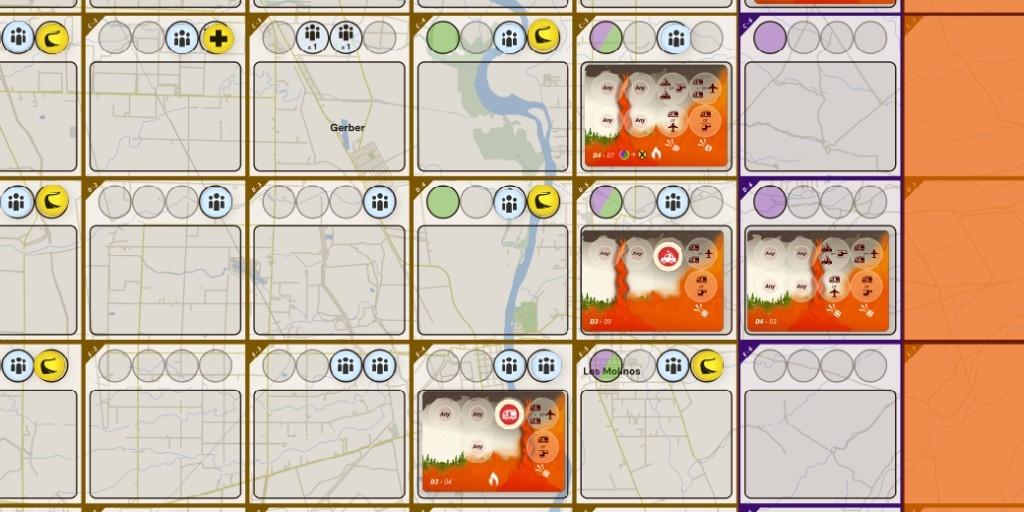
The exercise can be set in your own community, using a satellite map of the area. Local geography gives your teams practice adapting their response to the places they need to protect, with the resources they would have available in a real crisis.
Players take on roles with interconnected responsibilities. Area Command reads the weather forecast and uses reports from the divisions to anticipate needs and allocate resources. Division teams work the map to contain the fire, evacuate residents, and protect critical infrastructure, sharing resources when they can. Area Command sees the forecast but not the full map, and the divisions see the map but not the full forecast. Success depends on clear, timely communication between them. As the exercise progresses, teams make decisions, see the consequences, and respond to the new situation. Each decision informs the next, giving staff an engaging way to work through a crisis together. Through this shared experience, players build relationships they can draw on when a real crisis demands a coordinated response.
Learning Objectives
- Assess geographic vulnerabilities and identify priorities, bottlenecks, and weak points in urban and semi-urban wildfire response.

- Prioritize and allocate scarce resources to contain fires, protect lives, and safeguard critical infrastructure.
- Strengthen coordination and communication across agencies and between strategic and tactical levels.
- Incorporate forecast conditions into decision-making under uncertainty.
- Anticipate cascading impacts as conditions escalate toward firestorm.
Built to HSEEP Standards
EMCE: Firestorm meets HSEEP's official definition of a Game, one of seven federally recognized exercise types. It runs as a structured, multi-jurisdictional exercise producing findings for your After-Action Report and Improvement Plan. The game exercises FEMA Core Capabilities including Operational Coordination, Situational Assessment, and Mass Care Services. Full capabilities crosswalk provided at purchase.
Game Details
This game unfolds over four timed rounds, with conditions escalating each round.
Prepare: Before the fire spreads, teams study the map, the forecast, and the location of people, fuel, and infrastructure in each division, then position their first resources.
Respond: Each round, Area Command updates the forecast and distributes incoming resources. Divisions then commit those resources to fighting fire and evacuating residents, all under time pressure. Resources arrive late, are never enough, and the fire moves with the wind. When infrastructure is lost, the effects cascade. A downed power line can start new fires, and a lost hospital means more people to evacuate. In the worst conditions, firestorm sets in, the fire spreads in every direction, and aircraft are grounded.
Review: Once the final round ends, players see the cumulative impact of their decisions on lives, infrastructure, and the territory still burning. A structured debrief connects what happened on the map to the exercise objectives.
 Completion Time: About 2 hours, including the 30-minute debrief
- Number of Players: 3–10 players plus a facilitator
What's Included and Customization
Each game of EMCE: Firestorm includes:


Elements of this game may be customized, including:
- The game map. We build the board from a satellite map of your own jurisdiction, gridded and populated with fuel, housing, population, and infrastructure markers.
- Critical infrastructure and priority locations specific to your community.
- Events on cards.
For all customization requests, CAPTRS requires a discovery call with our team. We will then provide a bid of costs associated with the customization.
What Our Players Are Saying

Request a Quote
Pricing is based on scope & use case